[EN] After an earthquake, is the route from the exam room to the emergency department open? | 2026-11-13
관리자
SCH Disaster Medicine Center — Analysis
2026-11-13 · SCH-COLUMN-2026-11-13 · QUAKE-HANDOVER · EN
On the day exam sites are checked, a question for medical services
Where can a teacher hand an injured student over to an ambulance crew? Sometimes the school address is enough. But if the usual entrance is closed, or families have gathered at one gate, the teacher and crew can wait in different places even with the same address in hand. An earthquake readiness check should follow the route from the exam room to the ambulance entrance. A handover succeeds when each person knows what the next person needs to confirm, whichever end of the route receives the first call.
On 13 November, Korea’s Ministry of the Interior and Safety reviewed earthquake preparedness for the College Scholastic Ability Test with the ministries and agencies responsible for education, fire services, weather and policing, and with local governments. The test for the 2027 academic year is scheduled for 19 November this year. The review examined arrangements revised after the 2017 Pohang earthquake. Preparations include instruction and drills for invigilators and candidates before the exam. The Korean news today concerns that work. Holding a meeting tells us neither the likelihood of an earthquake on exam day nor how well a drill performed.[1]
Schools and hospitals serve the same community in different ways. While an exam can pause for a classroom check, a hospital may have dialysis or surgery under way, with patients who cannot simply leave. Even when a replacement exam site has been found, someone needs to establish whether a student who requires assistance can get there. A vacant hospital bed is usable only if a team can receive the patient and the way to the bed is open. The information these institutions can exchange is more specific than a number describing the shaking. Who can meet whom, where, and how far can they accompany the person after that?
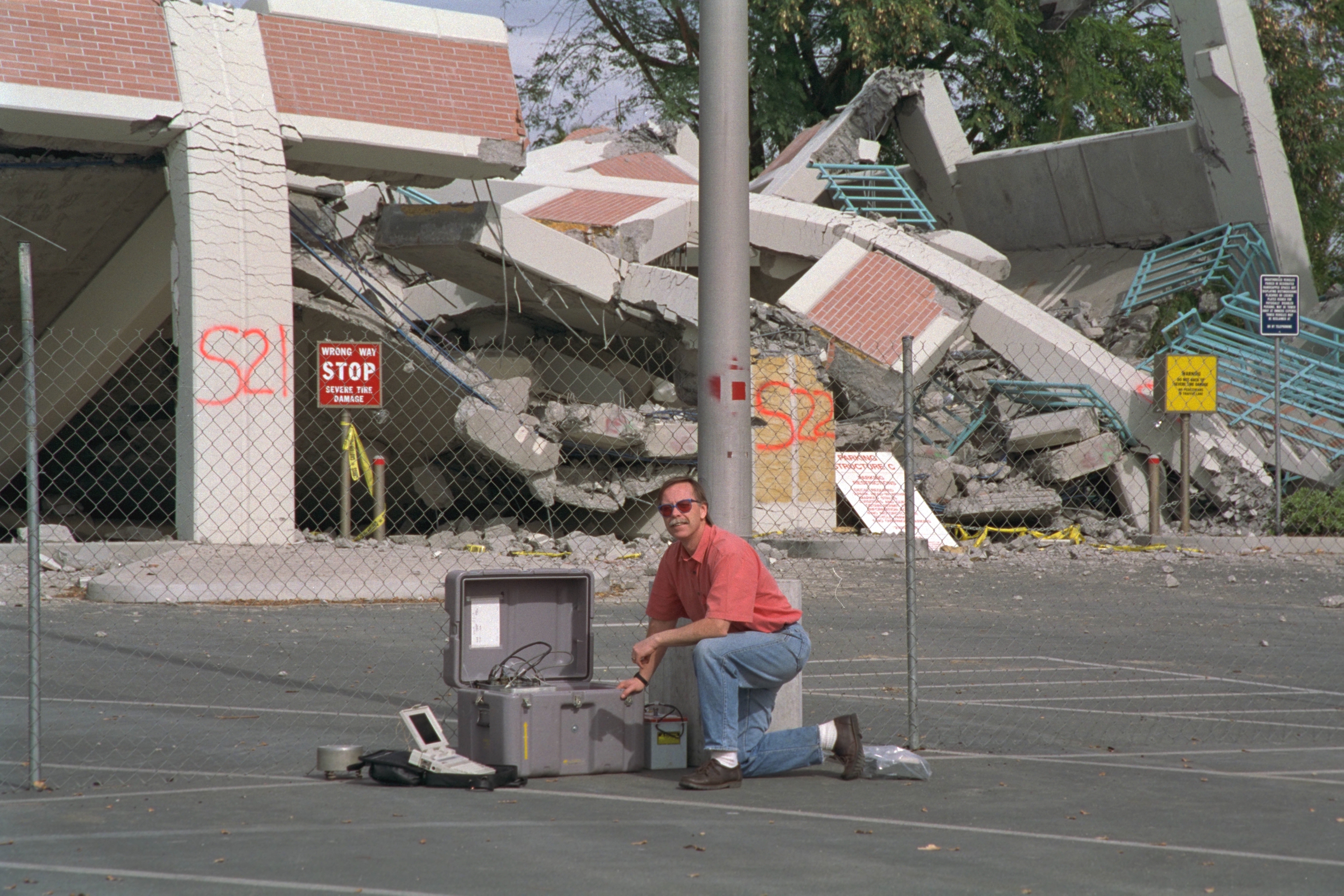
Two different reports from Japan and Guatemala
An earthquake struck Japan at about 1:04 a.m. local time on 8 November. In its release that day, the Japan Meteorological Agency gave a preliminary magnitude of 5.7 and reported an intensity of 5 Upper on the Japanese scale in Chita City, Aichi Prefecture. Magnitude describes the size of the earthquake. Intensity describes the shaking observed at a particular location. The figures are on different scales. Exam venues and hospitals receiving the same bulletin still need to check their own premises and routes. The Japanese intensity rating in this release does not establish an action threshold for a Korean exam site.[2]
In its third bulletin, dated 9 November at 10 a.m., Japan’s Fire and Disaster Management Agency counted 22 injured people across Shizuoka and Aichi prefectures. This was a provisional compilation of prefectural reports. A later local bulletin illustrates why its date matters. Aichi’s fifth report, as of 3 p.m. on 11 November, recorded one person with serious injuries and twenty with minor injuries in that prefecture. The initial release placed the epicentre in western Shizuoka, while the later report described it as eastern Aichi. They describe the earthquake that occurred at the same time. The two place names do not represent two earthquakes.[3][4]
An earthquake also occurred off Guatemala’s Pacific coast on 10 November local time. The national disaster reduction agency reported that day that shaking had been felt in several areas and precautionary evacuations had taken place at some locations. Reuters reported shaking in buildings in the capital. The national estimate of magnitude differed from the US Geological Survey estimate cited in press coverage. We have kept the estimates separate and have not averaged them. The area in which people felt shaking, the decision to evacuate, and the number needing treatment are different observations. These initial accounts give little indication of the workload inside hospitals.[5][6]
These events offer no indication that Korea faces imminent shaking of similar intensity. What makes them worth reading together is the difference in timing. Korea has an opportunity to test arrangements before the exam. Japan has agency counts taken at specified times after shaking. Guatemala has initial observations from the field. Different decisions are possible at each stage. Before an event, teams can test communication and travel. During the initial response they can identify what they have yet to hear. Afterwards, successive reports from the same area can help them revise an early assessment.
What a count of 22 can tell us
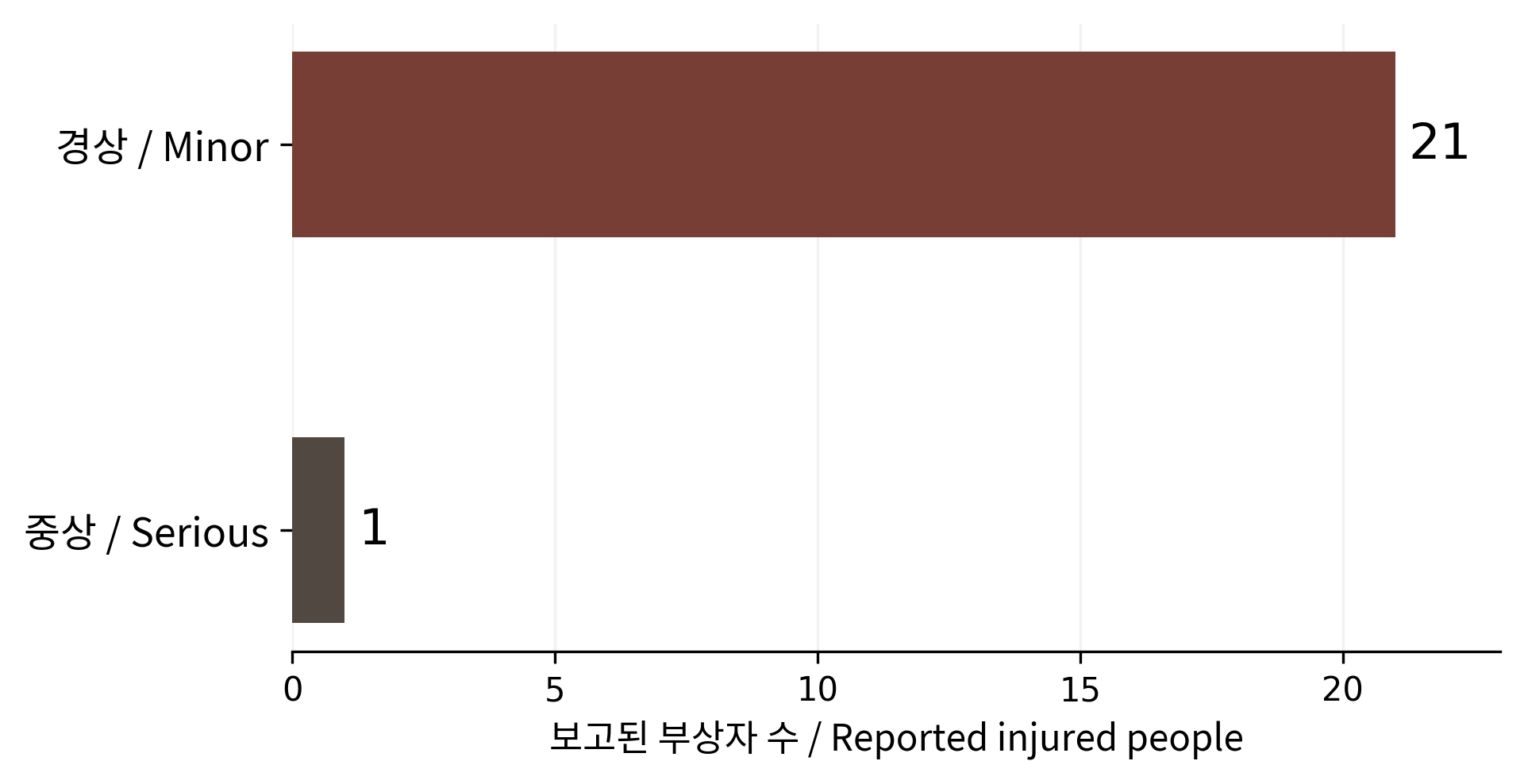
Figure 1 uses the injury columns of the Japanese fire agency’s third bulletin. The unit is one reported injured person. The denominator is the 22 people reported injured in the two prefectures by the stated time. The categories are the report’s own classifications of serious and minor injury. It counts neither ambulance dispatches nor hospital visits. It does not say how long each person occupied a bed, how they reached an emergency department, or whether they were transferred. The chart retains the source categories. The table below it gives the prefectural subtotals.[3]
Twenty-one people were classified as having minor injuries and one as having serious injuries. As shares of the reported injured, these are 95.5% and 4.5%, rounded to one decimal place. The subtotals of 19 in Aichi and 3 in Shizuoka add to 22. The serious-injury cell for Shizuoka is blank. We retain that notation in the table so readers can see that the minor-injury count of 3 equals the subtotal of 3. Other blank damage fields should not automatically be treated as confirmed zeros. Both bars start at zero and use the same unit.
| Area | Serious | Minor | Total injured |
|---|---|---|---|
| Shizuoka | — | 3 | 3 |
| Aichi | 1 | 18 | 19 |
| Total | 1 | 21 | 22 |
The count of 21 minor injuries does not tell us how many patients went home from an emergency department. Someone classified as having a minor injury for an administrative report may still need assistance with travel, an examination, or help contacting family. Nor is there evidence that everyone in the report used an ambulance. Patients attending for other reasons are outside its denominator. Understanding the work of an individual hospital would require arrivals and handovers by time, use of clinical space, and information on other patients. The count of 22 cannot supply those details.
The calculation changes depending on whether the question concerns a difference between places or an update from one place. For Aichi’s share on the morning of 9 November, we need the total across both prefectures. The fraction is 19 out of 22. But for the change in reported minor injuries within Aichi, the comparison is 18 on 9 November and 20 on 11 November. The difference of two refers to the number of people in the reports. It does not establish whether two people sustained injuries in the interval or earlier injuries were registered later.[3][4]
There is also a choice about incorporating an update. Adding the new Aichi figure to Shizuoka’s figure from two days earlier produces an arithmetic sum but no two-prefecture total confirmed by an agency for that time. We therefore show the intact table from one reporting time and describe the later information separately. We have not run a significance test for population injury risk or attempted to rank the prefectures’ medical responses. A change of reporting scope matters more to interpretation here than an extra decimal place.
Inside a hospital, the denominator changes
A study by I-Ching Yang and colleagues takes us inside one emergency department after the 2016 earthquake in Tainan, Taiwan. The investigators reviewed records for the first 24 hours. Of 375 patients, 93 had an earthquake-related presentation, or 24.8%. Among the 145 trauma patients, 91 had earthquake-related injuries, or 62.8%. “One in four” and “more than half” can both describe the same department on the same day. The relevant question depends on the work the department needs to plan.[7]
A shift lead estimating total demand for the incoming clinical team needs to count patients attending for other reasons. For the person running the trauma treatment area, the number of trauma arrivals and when they concentrate may matter more. The number of times a test is performed is yet another unit. One person can have the test more than once. Asking a single departmental figure to answer all these questions risks counting the same person or task twice, or leaving the staffing needs of ordinary care out of the calculation.
Placing the Tainan and Japanese counts side by side does not produce a comparison of national risk. One is a single hospital’s clinical record, the other an injury report covering two prefectures. A department’s referral role, whether neighbouring hospitals remained open, and where the reporting interval begins can all change the proportions. The Tainan study supplies no formula to convert regional injuries into beds. It shows why a Korean hospital seeking to answer a similar question would need to examine routine and earthquake-related care together in its own records.
Patients arriving from outside are only one source of additional work. Kyung Don Yoo and colleagues documented one dialysis clinic’s experience in the 2017 Pohang earthquake with help from the local clinical staff. Fifteen people were receiving haemodialysis. The building sustained no damage, but a power failure stopped the water purification equipment and the storage tank pump. Backup power for some equipment did not keep the dialysis water flowing. Staff assisted patients in leaving and rescheduled treatment. Care can be interrupted without a collapsed ward or an influx of injured patients.[8]
The report establishes which equipment stopped and what work had to be reorganised at one facility. It does not establish whether all dialysis clinics in Pohang closed for the same length of time or what rescheduling meant for each patient’s subsequent health. An inventory of generators is therefore an incomplete assessment of a dialysis service. Equally, the experience of one clinic does not discredit backup systems at other hospitals. Even within a building, the answer about which activities can continue depends on who has checked which circuit.
The World Health Organization’s Hospital Safety Index guide examines structural safety, the safety of nonstructural elements such as equipment, and capacity to manage emergencies. Checking load-bearing columns and beams is a different job from checking how a ceiling or pipes affect a route or treatment space. Procedures for deploying staff and resources are also part of the evaluation. This framework can help identify omissions before an event. It gives neither permission to re-enter a particular building after shaking nor a clinical threshold for moving a patient.[9]
The later Aichi report makes the distinction tangible. It records part of a ceiling falling in an office at a health science facility and, separately, the restoration of lifts at a park facility. One is damage to a particular space, the other a change in the state of particular equipment. Neither establishes that hospitals across the prefecture stopped functioning or that clinical services nearby resumed when the lifts did. Naming the place checked and the work that becomes possible there keeps a field report accurate.[4]
From the exam room door to the emergency department
How much should schools and medical services test together before the exam? Every teacher need not memorise a hospital’s communication structure. A joint exercise could start by asking whether the person helping someone at the exam venue, the person calling Korea’s 119 emergency service, and the person meeting the crew understand the same situation. Which gate is open? Can the guide actually leave their post to meet the crew? Who will supervise the remaining students? The answers determine whether the plan will work. Local teams can adapt the exercise to the gates, rooms and services they actually use.
Imagine that the usual ambulance route to an exam site’s front gate is temporarily closed. Staff inside the school already know that the gate by the sports field is open. Unless they change the directions given to the crew before it arrives, the crew may have to call again from the front gate. An announcement about the open gate is only the first step in this exercise. Can its recipient repeat the gate’s name? Does the sign use the same name? Is someone actually there to accompany the crew beyond the entrance?
Consider the same fictional exercise from the perspective of a student with limited mobility. An open gate by the sports field is still inaccessible if the route to it includes stairs the student cannot use. A route check would establish whether there is room for mobility equipment, whether someone who assists communication can accompany the student, and who will take personal items and equipment. Asking a student to describe a disability or illness in front of the entire exam room raises the cost of asking for help. A designated contact who can receive support requests privately beforehand offers a more practical arrangement.
Words or illustrations at the door can convey the same information to someone who has difficulty following an announcement. But putting up a notice does not establish that it can be read from the student’s seat. The exercise can also include a final check on candidates in separate rooms. If different people keep the departure and arrival lists when students change rooms, someone must compare the gaps and know who will follow them up. The record kept by the school and the information passed to clinicians should each contain what the recipient needs for their role.
Whether the exam continues or moves is a decision for education authorities and the responsible person on site under the applicable procedures. Medical support staff can supply relevant observations. Can a stretcher pass down a particular corridor? Has a student who left for treatment been handed over? Which room still needs help? Asking clinicians to authorise resumption of the exam, or teachers to assess structural safety, would place decisions with the wrong people. When passing on another profession’s assessment, identifying its source and the time of the check can reduce confusion.
How long is an offer to receive a patient good for?
Hospitals and ambulance control may attach different meanings to the same verb. When a hospital says it can “receive” a patient, does that mean a vehicle can reach the emergency entrance, or that a team can provide the examinations and care the patient needs? Shortly after shaking, only some departments may have replied. Reporting an unchecked imaging service as fully available could send a patient to a facility unable to provide the care. Reporting a functioning team as closed could send a patient unnecessarily far from help.
It may be more informative to trace one ordinary contact from beginning to end than to build a large new communication system. The hospital contact describes one service available and one constraint still being checked in terms the teams actually use. Ambulance control repeats the information in its own words and asks which entrance to use. The two parties agree who will check next. If the situation changes, the update needs to reach vehicles still en route as well as crews already there. The exercise can include a shift change between the person who entered the first information and the one who must update it.
Sending everyone to the nearest large hospital is simple to explain. But that hospital may have experienced the same shaking and will already have patients attending for other reasons. Distributing patients evenly among hospitals can be equally insensitive to service capability and travel time. Within existing arrangements for ambulance crews to assess clinical needs, dispatchers could update which facilities can provide the relevant care and a safe handover. Road conditions, specialist staffing and the time of day make a fixed target for redistribution difficult to defend.
Where few institutions can reply overnight, repeated checks can pull people away from the work itself. Having one person answer the same question from many agencies and complete a detailed form each time places a burden on a small facility. Teams could try reporting the change and its confirmation time first, and filling in details when a particular patient needs them. Even a short form should distinguish “could not reach” from “reached, unable to accept.” The first calls for restoring contact, the second for finding another destination.
Care continues after a building is empty
Consider a fictional exercise based on the Pohang account. All patients in a dialysis unit have reached the assembly point. A supervisor reconciles the headcount and might reasonably think the evacuation exercise is over. For a patient, the question still to be answered is where and when to go next. Has family been reached? Is the clinical information ready for the receiving unit? Is transport available for the changed appointment? These details can lead to quite different experiences after the same evacuation. This is an exercise extending the documented task of rescheduling, rather than a newly observed event at a Korean clinic.[8]
A single “contact complete” entry can hide the problem. A patient may answer the phone and still lack help with travel. The receiving unit may have reserved a time that nobody has communicated to the patient. Within the patient’s consent, the team could establish a feasible way to travel and a contact for the next call, and keep unresolved cases on its list. There is no single treatment time or permissible delay to prescribe here. Those decisions belong to clinicians who know the patient’s usual condition and the circumstances.
Assuming families will handle all travel can leave people living alone, travelling long distances, or having difficulty understanding telephone directions out of the record. An assessment should include people who were hard to reach. Starting with everyone whose appointment had to change, a team can count how many have a confirmed next appointment and distinguish, where known, among transport difficulties, pending contact and an unconfirmed receiving unit. Keeping missing information distinct from a patient’s refusal helps identify who needs another call.
On return to a ward, the time a door opens may differ from the time care resumes. Facilities staff may open a route, departmental staff check equipment, and a clinical team coordinate with patients, in sequence or in parallel. Recording only the moment each department finished its own work makes it difficult to see why someone was still waiting. For cases where care resumed late, a brief account of who looked after the patient and where during the interval can reveal a gap between opening a space and staffing it, or between arrival and treatment.
What a single situation display can miss
The unit of reporting also matters when public health staff bring school and hospital information onto one screen. Imagine a green dot on a map for each institution. At the school, green might mean the building check is complete. At the hospital, it might mean someone answered the phone. Nothing on the map confirms that a patient can travel between the two. Instead of indefinitely adding fields, choose one connection that matters to the decision and ask both parties the same question. Who checked that the vehicle can reach the place the school named, and who should hear first if access changes?
Measures of recovery should also change with time. Initially it matters which institutions have not made contact. A few hours later, it may matter more how many people still lack a destination despite telephone contact. Later still, someone needs to check whether people with changed appointments actually received care. If a display refreshes only the fields chosen at the outset, the difficulties may appear to vanish the moment all institutions answer the phone. Showing institutional status and outstanding patient journeys on separate lines helps explain the work that remains.
Hospitals’ usual roles also matter. Counting a hospital that never offers a test at night in the same way as one that stopped the test because of the earthquake exaggerates disruption. Conversely, a hospital that maintained its own services but took on patients from a neighbour and developed a queue may escape the damage list. Recording what was normally available on the same weekday and shift, alongside the extra work received from elsewhere, would help. Holidays and staffing changes can still alter waiting times independently of the earthquake. A single before-and-after comparison cannot establish the effect of either the earthquake or a response measure.
These records need different audiences. The public needs to know which contact point is open and what directions have changed. The team taking over a patient needs to know what mobility assistance is required and what has already been checked. Keeping the routes for sensitive information and public notices separate allows clear instructions for the public and precise information for those providing care. An exercise can test the distinction without using real patient data. If a fictional handover record reaches a public noticeboard, correcting that route should be the next task.
Evaluating a small exercise
A first exercise can use one real address and the school’s regular contact network. In a simulated call clearly distinguished from an actual dispatch, give the participant playing the ambulance crew the location and the handover point. An observer records the first contact, the moment both parties confirm the same location, and when the designated person reaches it. If the handover point changes, record why in one line. There is no need to claim the exercise shortened response times. Discovering that a school gate has a different name on the dispatch map and reconciling the two names gives the next exercise a specific aim.
The hospital can select one service for the same exercise. Before declaring imaging available, did someone check only the power supply, or also the equipment, the staff, and the patient’s route to the imaging room? Note how the emergency department described the status while awaiting confirmation. If “hospital operating normally” concealed a limitation, try naming the service and the constraint together next time. This gives one department a brief, practical test of what it can actually determine, without waiting for a large joint exercise.
Scoring performance on time alone can reward the wrong behaviour. If a team replied quickly but named the wrong entrance or reversed its answer before the patient arrived, time to first reply says little about performance. Using all requests as the denominator, teams could also count those for which the recipient correctly repeated both the location and available service. Where a route was changed, record whether it worked for someone who could not walk independently. If no evidence remains to assess accuracy, mark the outcome unknown instead of counting a success.
Record conditions when the exercise is repeated overnight or at a shift change. If staffing differs, or the person giving directions remembers the first exercise, a difference in time cannot readily be attributed to the new procedure. For a small exercise, read the cases for recurring omissions, evidence that someone actually used the new sign, and delays to other patients while staff followed the procedure. On a busy clinical day, limit participation if necessary and record which roles were not tested. That makes later comparisons more intelligible.
At the end, identify who will check each correction. After changing a road name at the school, compare the school’s screen with the dispatch map. If the hospital changes its usable entrance, a different crew can test whether the incoming shift receives the directions. When following up a patient’s changed appointment, the responsible department can verify the handover without circulating a public list. The resulting exercise report identifies work to be checked next time rather than ranking institutions.
What will actually happen on 19 November is still unknown. One concrete outcome of the pre-exam review would be for the people responsible to describe, in mutually intelligible terms, the route from a candidate’s room to the place medical staff will meet them. Separate reports of “no problem” after shaking cannot establish that the route is continuous. Can the crew find the gate the teacher named? Can the hospital provide the care the crew confirmed? Does the person whose appointment changed receive the next call? Following those connections shows how far preparations have reached.
References
- [1] 행정안전부. 행정안전부, 2027학년도 수능 대비 지진 대응태세 철저히 점검한다. 2026-11-13.
- [2] Japan Meteorological Agency. 令和8年11月8日01時04分頃の静岡県西部の地震について. 2026-11-08.
- [3] Fire and Disaster Management Agency, Japan. 静岡県西部を震源とする地震による被害及び消防機関等の対応状況(第3報). 2026-11-09.
- [4] Aichi Prefecture. 11月8日の愛知県東部を震源とする地震による被害情報について(第5報). 2026-11-11.
- [5] SE-CONRED. Conozca las herramientas de alerta sísmica disponibles en Guatemala. Nota de Prensa 365-2026. 2026-11-10.
- [6] Reuters. Magnitude 5.6 quake strikes off Guatemala coast, shakes El Salvador, Nicaragua. 2026-11-10.
- [7] Yang IC, Peng AC, Hsu CC, Chen KT. Can the emergency department sustain the first strike? Experience from the 2016 earthquake in Tainan. Hong Kong Journal of Emergency Medicine. 2019. DOI 10.1177/1024907918770091.
- [8] Yoo KD, Kim HJ, Kim Y, et al. Disaster preparedness for earthquakes in hemodialysis units in Gyeongju and Pohang, South Korea. Kidney Research and Clinical Practice. 2019;38:15–24. DOI 10.23876/j.krcp.18.0058. PMID 30776874.
- [9] World Health Organization. Hospital safety index: guide for evaluators, 2nd ed. ISBN 9789241548984.
Korea’s exam-site review and earthquake reports from Japan and Guatemala frame a practical question for schools, ambulance crews and hospitals. How can they check that a handover route actually works?
SCH-COLUMN-2026-11-13,EN,QUAKE-HANDOVER